
胡日禧 Woo Yat-hei
Woo Yat-hei
Dancer / Actor / Choreographer
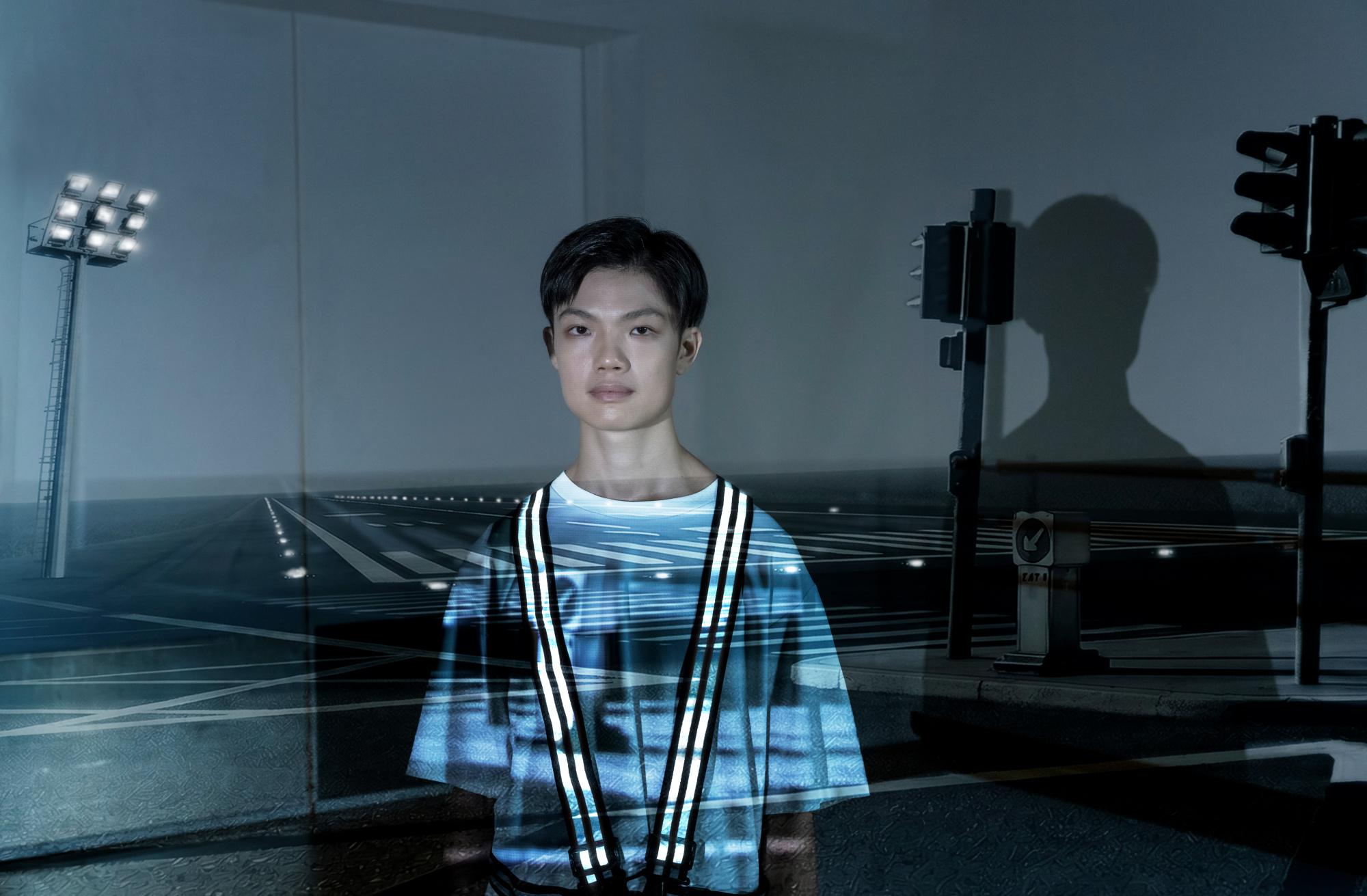
Woo Yat-hei is a Hong Kong dancer, actor, choreographer, and an independent performing artist whose practice spans theater and cross-media. His recent work, Burn Out Nijinsky, takes the performer’s labor and inner world as its point of departure, using intertextuality and parody to reflect on how individuals are shaped by history and society.
In 2024, he founded an artist collective 邊 乂 渡 and initiated a cross-media art project centered on the theme of “boundaries,” conducting field research in Hong Kong’s Sha Tau Kok Frontier Closed Area.
In 2025, he was selected to participate in “Intersecting Peripheries,” an international exchange program at the Toyooka Theater Festival in Japan, where he undertook further exchange and research.
During this residency in Taiwan, he joined Cloud Gate dancers in their daily morning classes, traveled to Sandimen in Pingtung for exchange and field research with Tjimur Dance Theatre, and visited Nangan, Matsu, to explore the theme of “Island Borders,” developing his research through experiences of the body, land, and borders.
Residency Journal
05 / 31 READ FULL TEXT +
Arriving in Taipei, I traveled from Taoyuan International Airport to the entrance at the foot of the hill leading up to Cloud Gate Theater in Tamsui.
The journey required three transit transfers—a kind of warm-up for my next trip to Tjimur Dance Theatre in the Timur community of Sandimen, Pingtung.
The first stop of this artist residency was Tjimur Dance Theatre, an Indigenous contemporary dance company rooted in Taiwan’s Paiwan culture. Founded by siblings Ljuzem Madiljin and Baru Madiljin, the company has long worked with ancient Paiwan songs and traditional culture, developing a distinct performance language that brings together voice and body.
As an artist from Hong Kong who grew up in the city, I entered the daily life of the dance company carrying with me my own ideas and imaginings about tradition, identity, culture, and performance.
A regular day at Tjimur begins with cleaning and preparing the space, followed by morning class and rehearsal, and ends with meditation, bodywork, and massage. As the company was scheduled to tour Germany the following week, choreographer Baru and the dancers were busy rehearsing two touring works, X aiwan Utopia and LIVING CULTURAL BODY.
During this week, I joined the company’s yoga classes and Tjimur Body Technique classes, and observed rehearsals for both works. In my remaining time, I visited the Taiwan Indigenous Peoples Cultural Park as well as major cultural venues and art spaces across Pingtung.
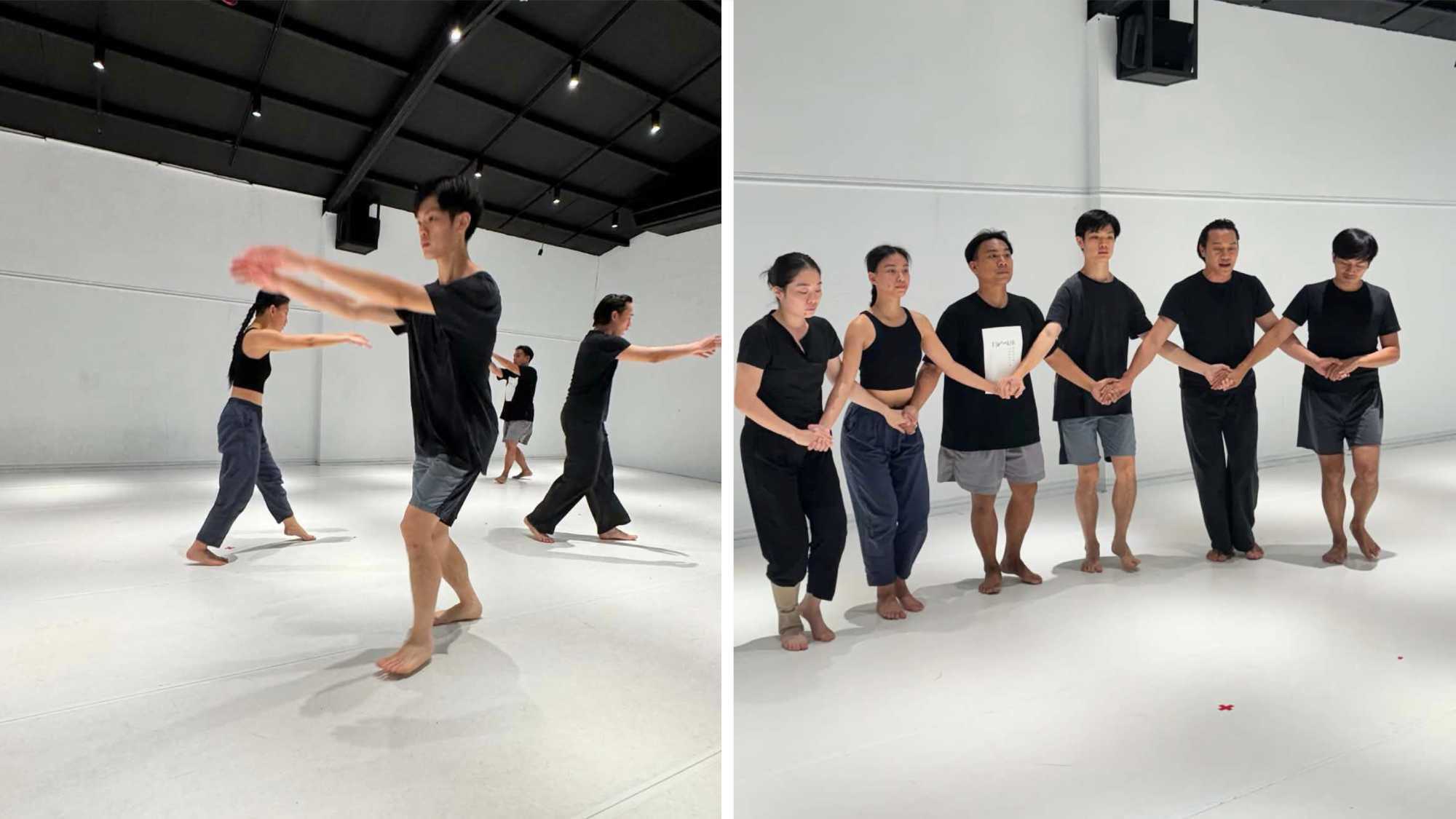
Tjimur Body Technique is a training method developed by the company through the integration of ancient tribal songs with traditional dance. The performance vocabulary that emerged from this training is also evident in their works, giving them a highly distinctive style.
Because the ancient songs are part of the cultural heritage of the Paiwan people and cannot simply be passed on to people outside the community, and because our time together was limited, I was not asked to take part in the singing during class. Instead, I focused on listening to and sensing the vibrations of the dancers’ voices and the rhythms of their bodies, and on experiencing the atmosphere of the space.
Ljuzem, my instructor, repeatedly emphasized that Indigenous singing originally served to communicate feelings, rather than to demonstrate technical skill. The exercises in class placed particular emphasis on the connection between body and breath.
In the company’s works, voice and movement need to work together closely. The dancers often sing while dancing, allowing the breath to drive the rhythm of the body and combining this with the vocal techniques of the ancient songs to arrive at a kind of “chanting body.”
When the dancers sang the ancient songs in unison, the resonance of their voices merged with their movement like an ocean. Although I did not understand the words or literal meaning of the songs, I could still sense their emotion and the contours of their sounds. It was a profound bodily experience.
Throughout history, Indigenous peoples in Taiwan have experienced different periods of colonization, oppression, and marginalization, creating a particular historical and cultural context. Many Indigenous artists continue to return to their communities and use their creative practice as a way of carrying their cultures forward.
As people who live in cities, how do we protect our own culture and language? How do we preserve and record the identities and memories of our communities through our everyday lives? How can we continue our ideas, traditions, and the values we believe in under present-day conditions? Where are our traditions? Can we choose our own traditions?
These are questions I still need time to process.
06 / 17 READ FULL TEXT +
As I write this, I have already traveled from Taipei to Matsu. As the environment changes, so does one’s rhythm.
Over the past two weeks in Taipei, I began experiencing traditional physical training in martial arts alongside Cloud Gate’s morning classes.
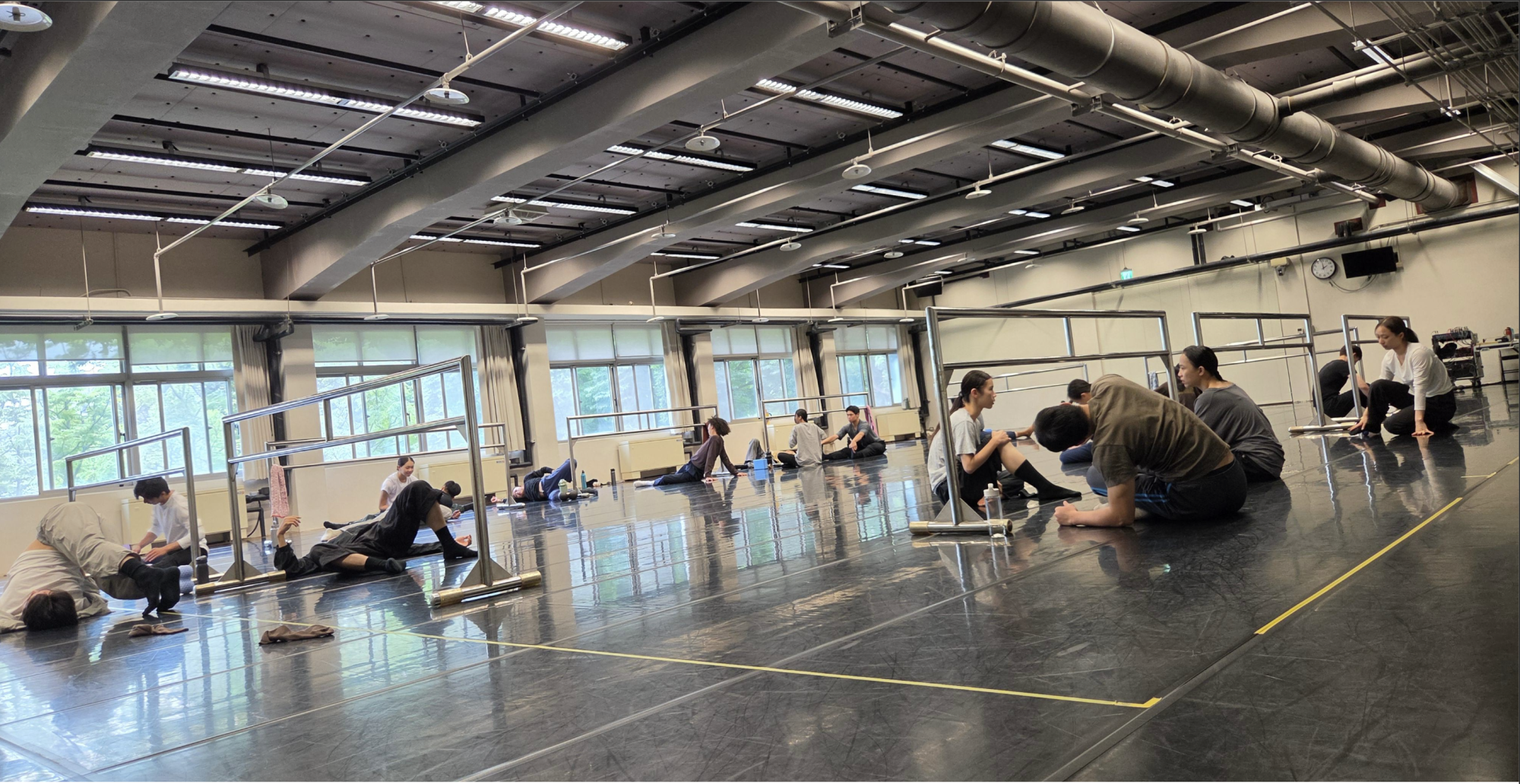
In the mornings, I joined Cloud Gate dancers for class. The week’s teachers included rehearsal director WU Jui-ying and independent choreographers CHOU Shu-yi and LIN Wen-Chung.
In addition to modern dance, ballet, and Eastern physical conditioning, Cloud Gate has now introduced street dance into its classes. There is a focused strength in the bodies of Cloud Gate dancers—quiet and grounded.
Throughout the year, the dancers tour frequently both in Taiwan and abroad, while also maintaining intensive daily training, rehearsals, and everyday routines. Sustaining that level of concentration is not easy.
A professional dancer’s body often exists in a state of tension and fatigue, which makes the morning warm-ups especially important. Learning how to use this time to find one’s center again, reconnect body and mind, and adjust one’s state for the day is itself part of a dancer’s craft.
My experience with traditional martial arts over these two weeks was equally rich. My first martial arts class took place at a training space near Dongmen. At first, I assumed that we would begin by learning traditional forms and movements. Instead, the instructor first had me wrap my hands and put on boxing gloves. It turned out that the first two sessions were boxing classes.
By chance, I began with some basic boxing stances, practicing footwork and developing a sense of distance. The following week was closer to a form of civilian self-defense. In paired practice, we attacked and blocked one another using foam weapons, practicing immediate reactions and defensive awareness in confrontational situations.
One of the instructors spoke about the origins of traditional martial arts. Many forms of traditional martial arts emerged from ancient conflict and warfare, and developed out of weapons training and wrestling.
Differences in the length and range of weapons, the terrain of a particular space, and even the design and weight of armor all gave rise to different forms of footwork, posture, and stance.
Beginning from these early forms, traditional martial arts gradually developed different characteristics in response to different needs, eventually evolving into methods that can also respond to situations in contemporary urban life.
In addition to classes near Dongmen, I also attended Wing Chun and Tai Chi Push Hands classes at a community hall in Beitou.
The class focused mainly on vertical and horizontal circular movements in Push Hands. We worked directly through the body, experiencing how force could be generated through a close structural relationship between different hand positions, and then attempting to disrupt an opponent’s rhythm and center of gravity.
We no longer need to live as people in the past did, fighting for our lives in hand-to-hand combat. But when danger occurs, how can we keep fear from taking over our minds? When faced with pressure, how can we keep from collapsing, maintain our structure, and respond consciously? How can we remain capable of protecting ourselves, and perhaps even protecting others? This kind of bodily awareness remains an important ability in contemporary society.
My experience of traditional martial arts training gave me a strong sense of groundedness. The practice and skills of fists, feet, and weapons are not simply techniques for attack and defense. They also contain a particular attitude. They are the result of people training their will into their bodies, fists, and feet—in order to survive, to resist chaos and power, and to defend the people, land, and way of life they love.
This experience has also encouraged me to continue exploring the relationship between the martial body and the construction of subjectivity, and through this to connect with an embodied perspective rooted in the Asian experience.
07 / 26
Residency Epilogue READ FULL TEXT +
From joining the regular practice of martial arts groups and community halls in Taipei, where I observed how communities pass on and engage with the movement language of traditional martial arts; to my residency with Tjimur Dance Theatre in Sandimen, Pingtung, where I experienced the company’s training and everyday life and observed how Indigenous culture is discussed and remembered between preservation and daily practice; and finally to field research in Matsu, where I used the body to read the historical traces and boundaries of the island landscape and collected sound material from the borderlands—this Cloud Gate residency journey has been extraordinarily rich and fulfilling.
Walking through cities and rural villages, I observed people, communities, streetscapes, and the constantly shifting rhythms of everyday life. At times, I deliberately moved away from familiar routes and wandered randomly through different places, searching for other ways of sensing space. Throughout this process, I gradually developed a particular sense of everyday life. One of the things I enjoyed most was meeting new people in different places along the journey. Brief but genuine exchanges between people are irreplaceable.
Space, distance, and rhythm are fundamental to martial arts training. They are also among the first things one perceives when entering a place. This became especially clear to me during my field research in Matsu.
The Matsu archipelago has rugged and steep terrain. Beginning in the 1950s, the islands underwent 36 years of military administration, during which local residents lived for decades under military control and martial law, with considerable restrictions placed on everyday life.
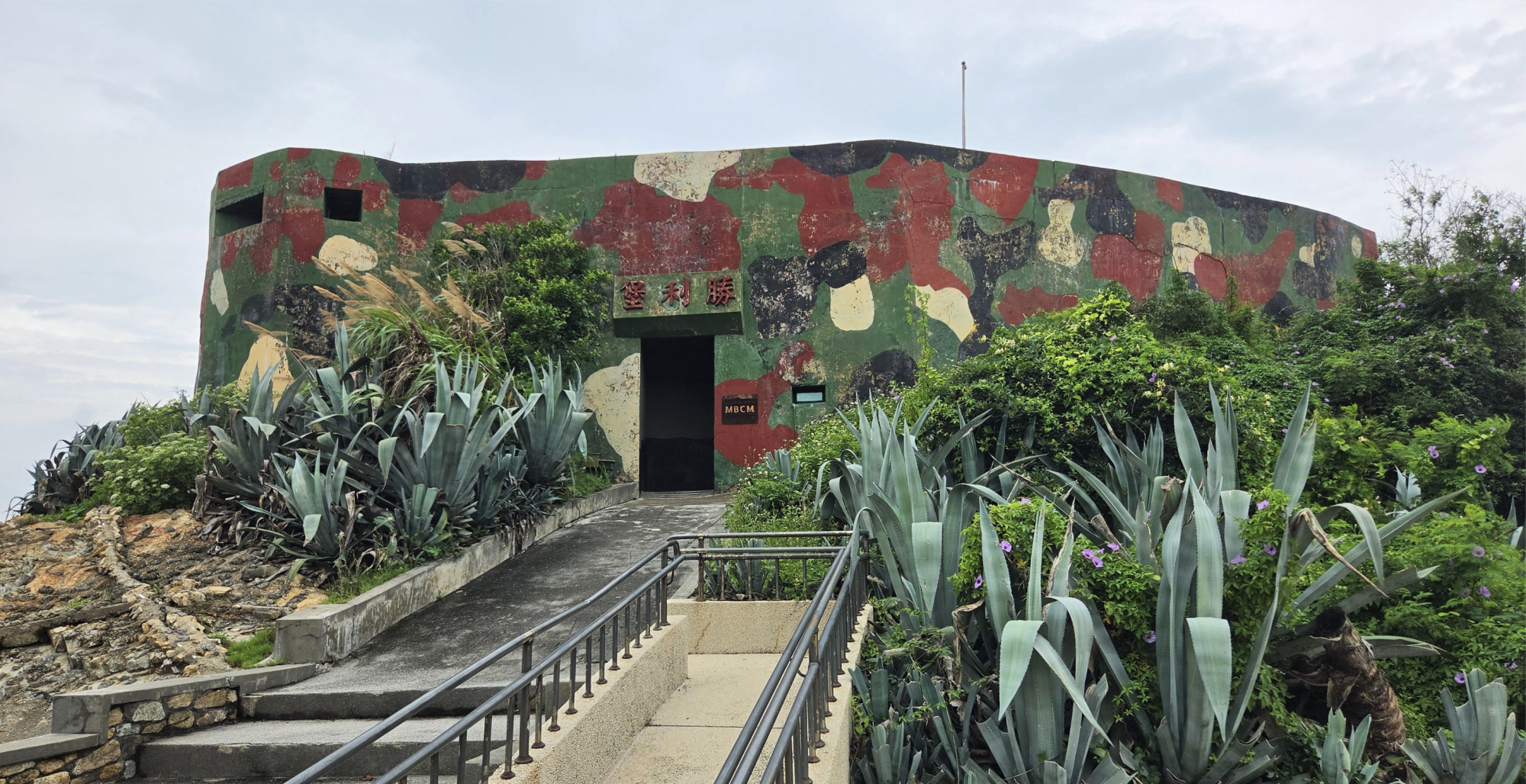
At the time, the government constructed extensive military defense structures according to the topography and strategic needs of each island, including coastal defense posts, military camps, tunnels, and air-raid shelters. Wartime slogans can still be seen throughout the islands today.
As political tensions eased, Matsu opened up to tourism. Today, many guesthouses and restaurants welcome visitors, while efforts in revitalization, conservation, education, and architectural design have also begun to reinterpret certain official historical narratives.
When I first arrived on Nangan Island, I was immediately struck by a raw sense of history. It forced me to slow down and sense the space, to enter the rhythm of the island and learn about its bodily cultures and stories through that rhythm.
Through this field research, and through what I encountered in traditional martial arts, Indigenous culture, and the islands of Matsu, my thinking went through different stages of change. These experiences led me to think about Hong Kong’s “cultural body.”
What did its past look like? What might its future become?
Hong Kong remains a city in motion and full of uncertainty, a metropolis with many different faces. If we reposition it within an Asian context, perhaps it can generate new relationships with larger histories and collective memories. Connecting the Hong Kong experience with the conditions of contemporary Asia may offer another way of seeing. These questions are still circling in my mind.
The future feels like a marshland covered in mist. At a particular moment in one place, members of a community join hands during a ritual, forming a semicircle as they begin to sing and dance. In another time and place, people in a city move through the streets in the same rhythm, slowly practicing a quiet pride that refuses to be defined.

Tjimur Dance Theatre
Cultural Affairs Department of Lienchiang County Government