
Ayano Yokoyama
Ayano Yokoyama
Dancer / Choreographer / Director of lal banshees
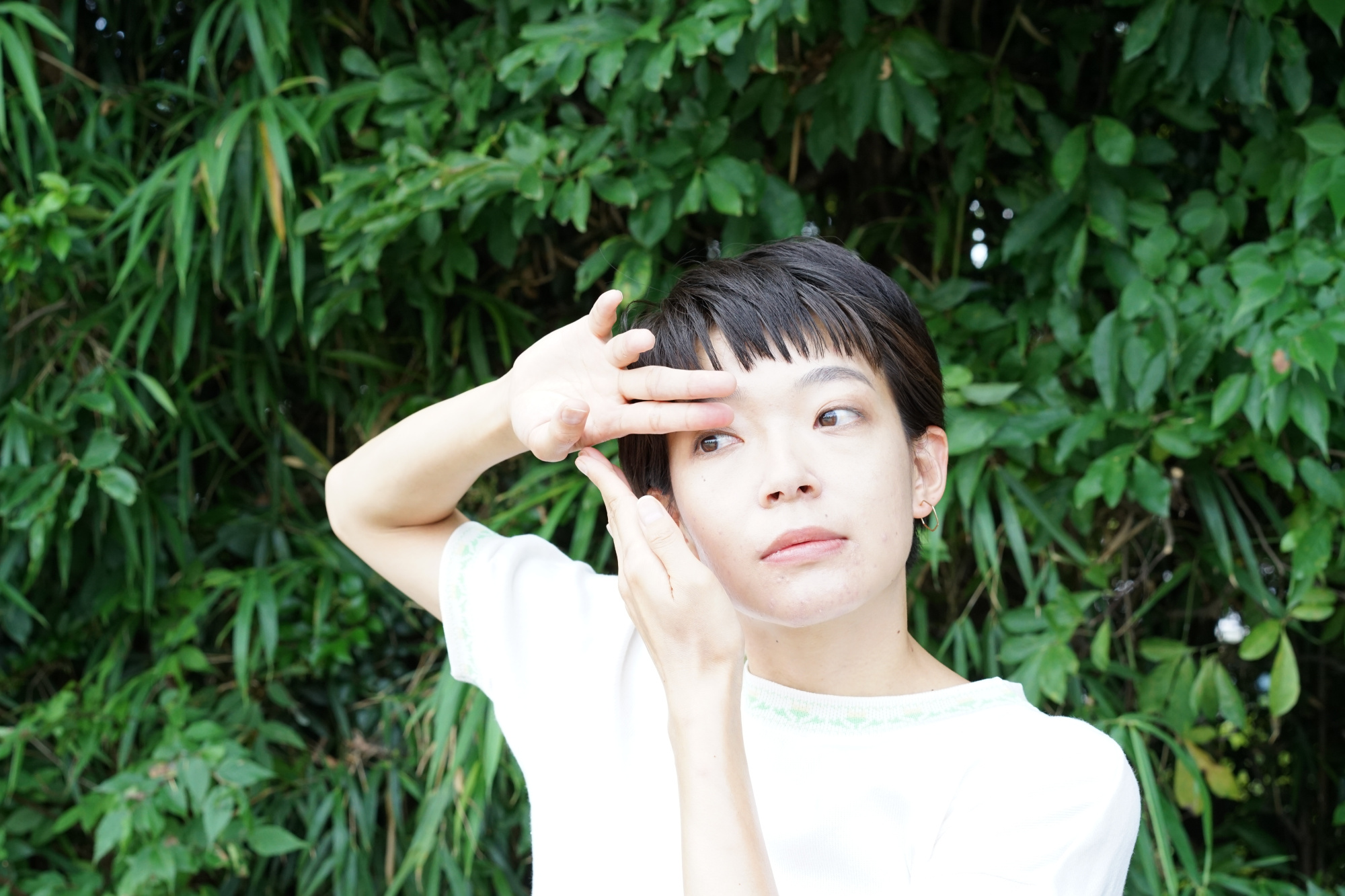
Ayano Yokoyama is a Tokyo-based choreographer, dancer, and artistic director of lal banshees. She began studying modern dance in childhood and later explored contemporary dance and hip-hop as a teenager.
In her practice, she explores unique movements focused on Eastern bodily sensibilities.
Rooted in terroir, lived experiences, and folk sensibilities, she creates works that uncover sensations and bring forth dance moments that transcend the boundary between the visible and the invisible.
She creates both solo and group works with intricately structured and dynamic choreographic compositions. Her work explores diverse relationships between sound, movement, and embodied perception.
The result is a unique choreographic language that resonates deeply on a sensory level and forms intricate connections with sound.
Since 2021, she has received support from the Saison Foundation through the Saison Fellow I program.
In 2020, she received the Jury Prize (Grand Prix) and the Porosus Foundation Camping2020 Prize at the Yokohama Dance Collection 2020, an international choreography competition, for her solo piece Suiyoubaion, from the two-part ocean-inspired work.
The piece reimagines approximately 200 discarded plastic bottles as stage scenography and she was later invited to present her work at Aerowaves Spring Forward 2022 (Elefsina, Greece). In 2021, her trio piece Snow on the seafloor received Second Prize and the Incentive Prize at the Kyoto Choreography Award 2020.
In 2022, her group work “YU-KEI ” premiered. Exploring the spirit of indigenous Japanese festivals and rituals, the work features a full-length live performance by a rock band and was invited to the HOTPOT East Asia Dance Platform in 2024.
In 2024, her solo work “/ (Solidus) ” was presented at Want To Dance Festival (Taipei, Taiwan), followed by an invitation to Sõltumatu Tantsu Festival (Tallinn, Estonia) in 2025.
In 2025, she further expanded her international activities through an artist residency hosted by Cloud Gate (Taipei, Taiwan) and an invitation to MONOTANZ FESTIVAL (Seoul, South Korea).
--
TOYOTA CHOREOGRAPHY AWARD 2016 Finalist
YOKOHAMA DANCE COLLECTION 2020 Grand Prix Jury Prize
Porosus Camping 2020 Prize
KYOTO CHOREOGRAPHY AWARD 2020 Incentive Prize
16th JaDaFo Dance Award
Residency Journal
OCT 22 — NOV 12, 2025 Searching for “Eastern Body” READ MORE +
In recent years, I've become interested in Eastern dance forms outside the Western context.
I research and conduct fieldwork on local Japanese customs, rituals, and traditional performing arts. I believe there are dances that can only be created by walking the land and experiencing it firsthand, so I strive to visit those places whenever possible.
I’m searching for “Eastern Body.”
When I think of the Eastern, it feels like an endless ocean, yet I seek not Orientalism or exoticism, nor something distinctly Japanese “和”, but rather the local bodily sensations familiar to each of us. It is not merely the physical body or techniques of bodily control, but an attitude formed by the land, all faiths, customs, habits, and the movements that arise from them (including the voice).
This “Artist Journey” was a precious and perfect opportunity to explore the “Eastern Body” in Taiwan, a place within East Asia yet distinct from Japan.
During this residency, I approached my research from three angles: the indigenous peoples, the Japanese colonial period, and Taiwanese Temple / Shrine / Place and festivals rooted in daily life.
The three weeks flew by. I'd like to write about just a very small part of it here.
I was introduced to Bulareyaung Dance Company, an indigenous dance company based in Taitung, and participated in their activities for several days. They taught me about regional differences between tribes, as well as their costumes, songs, instruments, and lifestyles. I experienced harvest festival songs and dances, mountain and river festival songs and dances, and daily songs of each tribe together with them.
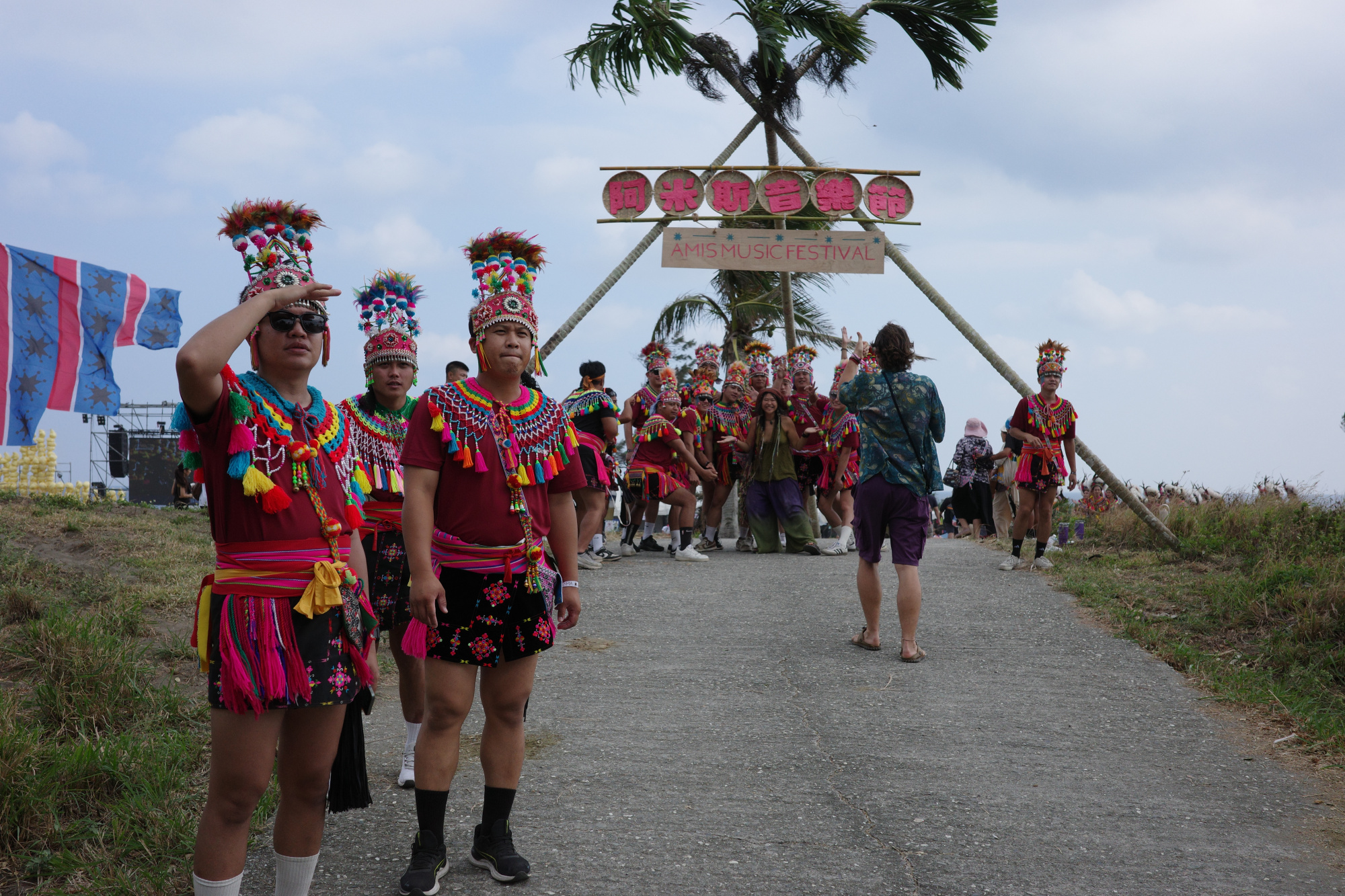
Fortunately, I was also able to attend the Amis Music Festival held by the indigenous people. 46 communities from over 11 tribes participated. A beautiful, overwhelming scene unfolded before me, where everyone seemed to acknowledge and respect each other.
Across Japan, there are many traditional performing arts where not only special performers but also the people dance together. These are very familiar to me. The indigenous people's festival, though completely different, reminded me of Japan's. Life and customs are reflected in the songs and dances. Perhaps it's more accurate to say that songs and dances coexist with daily life.
of those voices and physical movements rooted in real life.
Through these events in Taitung, I came to understand the profound importance of holding hands and singing for the indigenous people. And I was deeply moved by the sound of their singing.
The raw energy and aura of their voices. The way they project their voices to reach distant mountains.
It was impressive to hear that dancers who hadn't actually experienced hunting couldn't produce the vocalizations used for hunting. I kept thinking about the authenticity of those voices and physical movements rooted in real life.
However, I was glad to indirectly learn about ways to overcome this, and also about the indigenous people's perspective on how their traditions are treated.
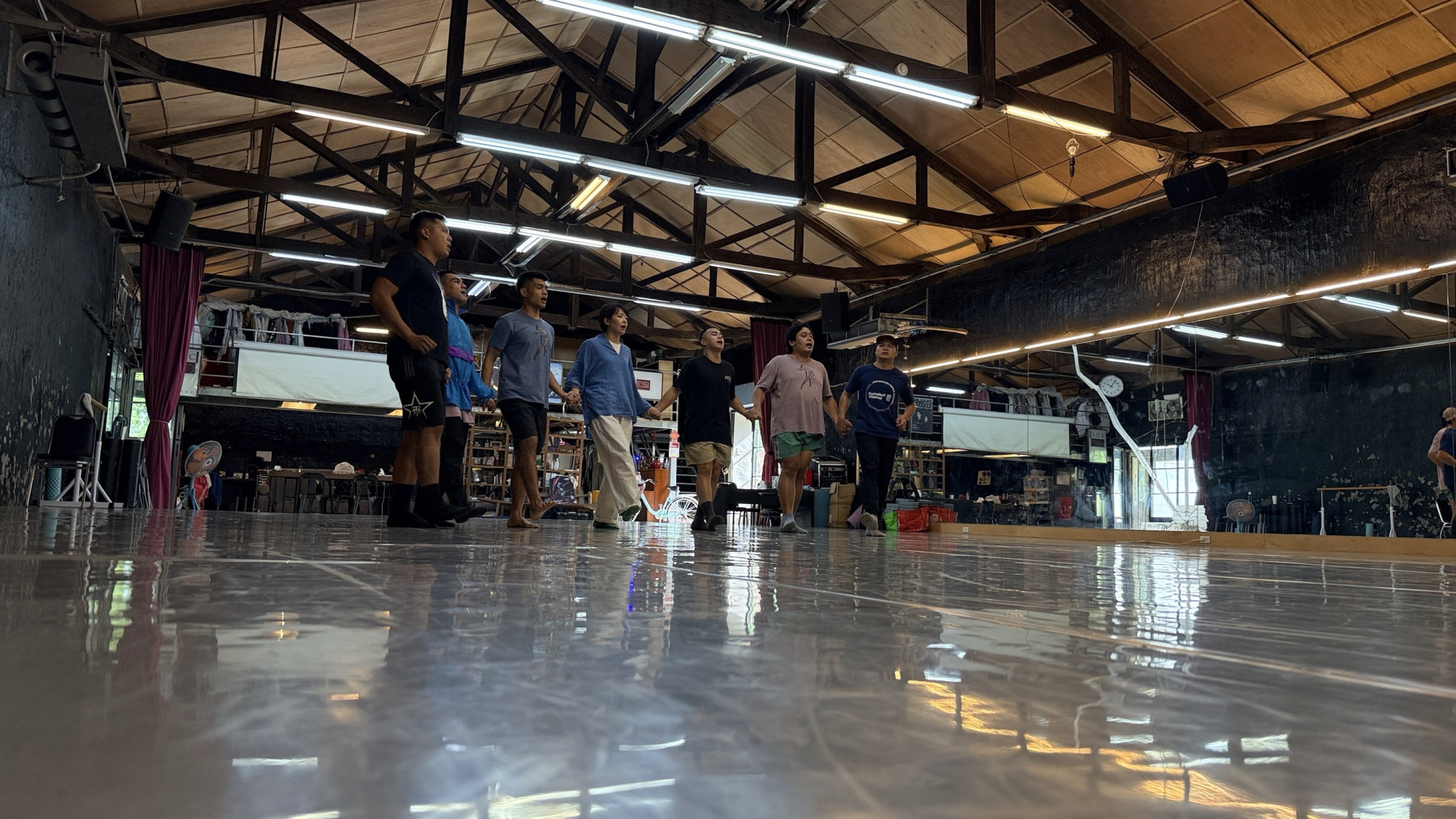
My stay in Tamsui was rainy throughout, with strong winds and rain lashing down amidst an overall haze. I felt a powerful, intimate presence of something akin to non-human life—it was an interesting experience, like the very scene depicted in Cloud Gate's new work, ALL EARS.
I was able to experience various elements up close—Cloud Gate Theater, Cloud Gate Dance Theater of Taiwan’s daily classes, and the company's outreach programs for the community—and understand what Cloud Gate means to Taiwan.
I felt firsthand their embodiment of a unique Eastern physicality and the immense background they've built over so many years.
To think that Cloud Gate have been searching for and practicing this “Eastern body” for so long. It's completely different, but it also reminded me of Japan's “Butoh.”
What impressed me most was how naturally the question of identity seemed to be discussed in Taiwan.
I believe it is precisely because Taiwan has such a multi-layered history that people there place such importance on their own unique roots—their “Eastern body.”
Learning about Taiwan also means learning about Japan. Being Japanese myself, this often brought up complicated feelings. But I'd rather know than remain ignorant.
It became an opportunity to reexamine my own country and roots.
It allows us to recognize differences and dance alongside them.
It reaffirmed my desire to work toward collaborating with various Taiwanese artists in the near future.
Walking along the Tamsui riverbank, I imagined what might have been if all the “spaces” of the East had developed in the modern era as “theaters” distinct from the Western-context “theater.”
This experience will help me deepen my understanding of the world of dance.
It's still very much a long journey, continuing to seek out the Eastern body.
I am grateful for this encounter and for everyone who showed me kindness.

Bulareyaung Dance Company
TAI Body Theatre